CDN (content delivery network)
What is a CDN?
A CDN (content delivery network) is a distributed network of servers, called edge servers, in many locations that store copies of a website’s files and serve them to visitors from the nearest location. Instead of every request travelling to one origin server, most are answered by an edge server close to the visitor.
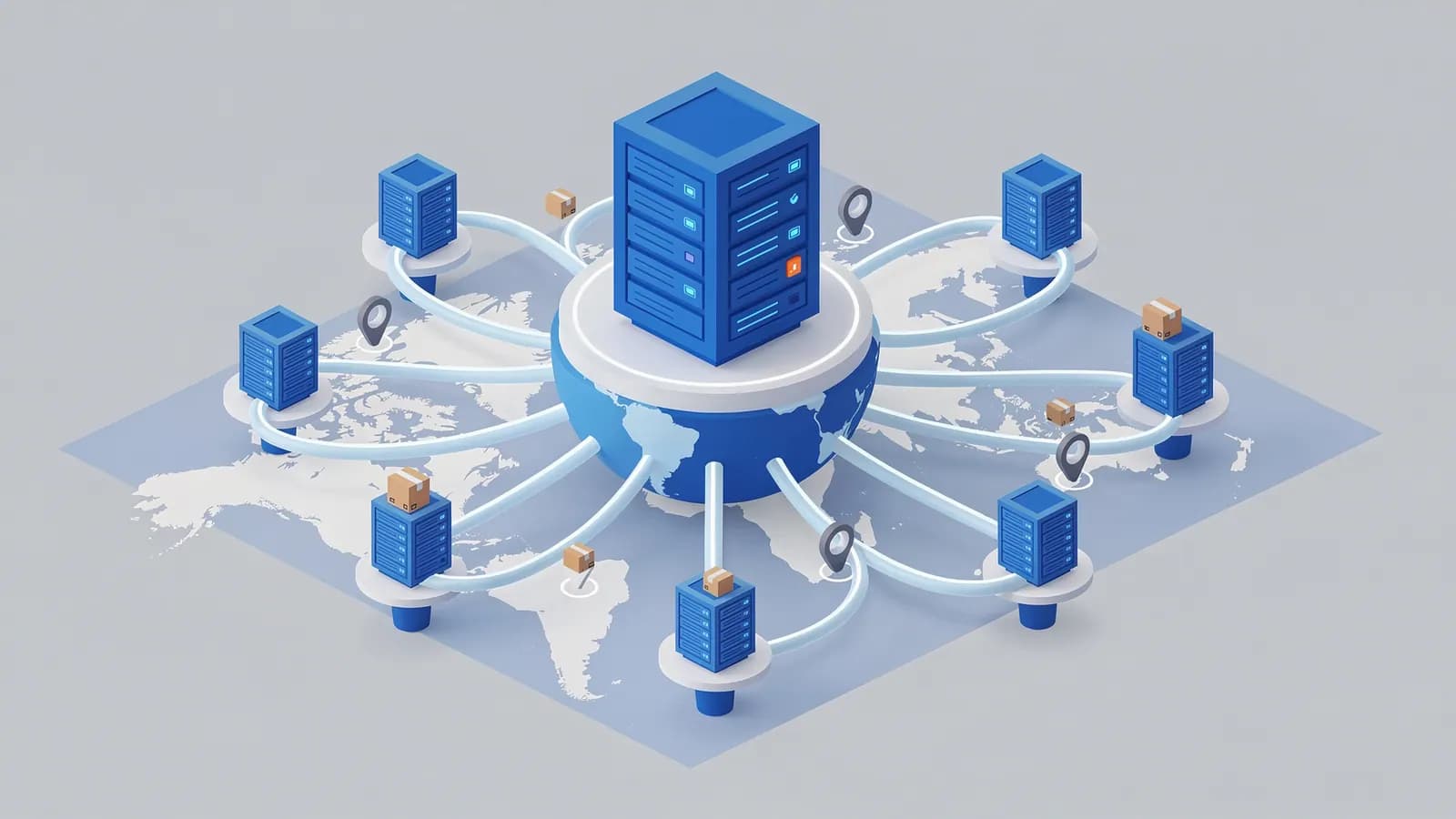
CDNs began by caching static files such as images, CSS and JavaScript. Most now also cache whole HTML pages, terminate HTTPS, compress and resize images, support HTTP/2 and HTTP/3, run code at the edge and protect sites against traffic floods and abusive bots.
Why CDN matters for SEO
Distance adds delay. A CDN cuts the time to connect and download, which lowers time to first byte and improves Largest Contentful Paint, especially for visitors far from your server. It also keeps sites up under load, which matters for crawling: Googlebot slows down when a server is slow or returns errors.
There is one common SEO risk. Bot protection and firewall rules on a CDN can block or challenge search engine crawlers, returning errors or challenge pages instead of your content. Check that verified crawlers such as Googlebot and Bingbot are allowed, and that any AI crawlers you want are not blocked by default settings.
How to set up a CDN for SEO
- Serve the whole site through the CDN on your own domain, and cache static assets with long cache lifetimes.
- Cache HTML where your content allows it, with sensible expiry and purging when pages change.
- Keep one canonical host and protocol, with redirects handled consistently at the edge.
- Check bot management settings so verified search engine crawlers are allowed.
- After setup, inspect a few URLs in Search Console and watch the Crawl Stats report for errors or a rise in response time.
CDN FAQ
Does a CDN help SEO?
Indirectly. A CDN makes pages faster and more reliable, which helps Core Web Vitals, visitors and crawling. It is not a ranking factor in itself.
Can a CDN block Googlebot?
Yes, if its bot protection or firewall rules challenge or block crawlers. Make sure verified search engine bots are allowed and check Search Console for crawl errors after changes.
Related SEO terms
Page speed is how quickly a page loads, shows its content and responds to input. Google measures it mainly through Core Web Vitals.
Time to First Byte (TTFB) is the time from requesting a page until the first byte of the response arrives. It sets the floor for every other speed metric.
Core Web Vitals are Google’s three metrics for real-world page experience: Largest Contentful Paint, Interaction to Next Paint and Cumulative Layout Shift.
HTTPS is the encrypted version of HTTP. It protects data between browser and site, and Google uses it as a lightweight ranking signal.
Googlebot is Google’s web crawler. It fetches pages so Google Search can index them, using a smartphone crawler for most sites.
AI crawlers (GPTBot, ClaudeBot)
AI crawlers are bots that AI companies use to collect web content for model training or for AI search answers, such as GPTBot and ClaudeBot.